Edited by GUDIAN Water · AI-assisted compilation and review · Sources checked: 2026-10-21
When a dormitory needs new drinking-water equipment, discussion often begins with “How many units should we buy, and what is the rent?” Yet subsequent operation depends on who maintains the units, how charges are settled, how water is supplied during faults and how handover works when the contract ends. Clarify these questions before equipment numbers and rent so proposals can be compared meaningfully.
1. Establish what the university intends to procure
Equipment purchase, equipment rental and campus drinking-water operation are three arrangements that should be compared separately. Purchasing equipment usually also requires subsequent maintenance arrangements. Paying rent or service fees requires a clear definition of the equipment and work covered. If an operator installs equipment and charges users, the arrangement also involves premises, tariffs, accounts and service exit.
These categories support discussion; they are not legal determinations of procurement classification, accounting treatment or contract nature. Relevant university departments must decide under applicable rules and funding and asset arrangements. Purchase, construction or operating activities must not all be labelled “rental” to bypass procedures.
| Arrangement to compare | Who to ask first | What to specify |
|---|---|---|
| Equipment purchase | Asset-management and user departments | Ownership, maintenance budget, consumables and end-of-life handover |
| Equipment rental or an agreed service | Procurement, facilities and user departments | Term, payment, consumable and testing scope, and fault contingency arrangements |
| Authorised campus drinking-water operation | University administration and the operator | Premises, published tariffs, payment accounts, refunds and exit |
2. Convert headcount into verifiable point-by-point requirements
The same population uses water at different times in dormitories, teaching buildings, libraries and offices. State the campus, building, installation location, hot and cold water requirements, sustained peaks and vacation occupancy, together with raw-water records, available power and drainage conditions.
Selecting unit numbers from headcount alone can miss break-time queues, night-time use and single-point failures. Check time-based records for a few representative locations before discussing phased deployment and adjustment rules. Confirm in advance whether pilots are permitted and how procurement and evaluation must proceed.
3. Check each item included in the rent
Ask each supplier to use the same checklist to identify who pays for equipment, transport and installation, connection alterations, cartridges and membranes, cleaning and maintenance, testing, repairs, standby provision, and payment or communication charges. List exclusions separately; “all-inclusive” does not define a scope.
Public university procurement documents include rental frameworks and annual assessments. For example, a 2025 Eastern Institute of Technology, Ningbo notice used phased deployment and renewal subject to assessment. This is a historical document for reference, not evidence that applications remain open, a Yunnan price or a GUDIAN Water project.
4. Consider semester endings and contract exit together
The contract should address winter and summer breaks, building changes, water and power outages, temporary university events and equipment relocation. Before deployment, discuss renewal, responsibility for removal and reinstatement, checking outstanding charges and handling users' balances.
For a specific Yunnan project, start with one university's real needs and a service scope that can actually be delivered. Regional pages only help organise local information; they do not establish local branches, signed university clients or guaranteed on-site response times.
Yunnan's 16 prefectures and cities: prepare records for the actual campus address
The table suggests how to organise information by location. It is not a survey finding on local water quality, campus numbers, existing customers or service branches. Confirm the university and teaching site, procurement and premises authorisations before discussing the feasibility of supply and rental.
| Local information page | What to clarify first | Suggested preparation |
|---|---|---|
| Kunming equipment and site information | Who coordinates campuses and buildings, and are drinking-water and laboratory requirements listed separately? | Actual addresses of each campus, building points, uses and responsible departments; proximity within one city does not establish on-site service capability. |
| Qujing equipment and site information | Will rental points be deployed in phases, and does the same quotation include consumables, testing and standby arrangements? | Phased deployment schedule, rental start dates, inclusions and school-funded items; check response and restoration responsibilities separately. |
| Yuxi equipment and site information | Are the same points used during breaks, evenings and vacations, and how is short-term continuous dispensing recorded? | Dispensing observations for representative periods, hot and cold water needs and months on campus; do not derive unit counts or annual consumption directly from total headcount. |
| Baoshan equipment and site information | How will spares, maintenance personnel and backup supply be provided at the actual campus, and which costs need separate pricing? | Equipment IDs by point, compatible consumables, staffing and transport conditions, outage provision and charges beyond the agreed scope. |
| Zhaotong equipment and site information | Do brochure test conditions correspond to feedwater temperature, peaks and power at the actual campus? | Actual feedwater and environmental records, manufacturer limits, vacation use and fault plans; do not infer water quality from the place name. |
| Lijiang equipment and site information | How will water be supplied for vacation residents, teaching and research, and closed buildings, and who checks before reuse? | The university's actual schedule, vacation occupancy, shutdown and restart checklists and responsible persons; tourist seasons do not replace campus usage records. |
| Pu'er equipment and site information | Does one contract cover dormitory, teaching, office and other water uses, and are drinking water and production or experimental uses separated? | Actual building uses, dispensing points, supply scope and each party's responsibilities, with a unified fault-reporting channel and maintenance records. |
| Lincang equipment and site information | How do actual equipment distribution, transport and maintenance conditions affect pricing, and who arranges temporary water during outages? | Campus addresses and points, verifiable service resources, spares and attendance arrangements; no fixed response radius is promised in advance. |
| Chuxiong equipment and site information | Which departments confirm school-paid rental, equipment purchase or an authorised operating arrangement? | Proposed cooperation structure, ownership of assets and costs, contract term and settlement basis; list unconfirmed items separately. |
| Honghe equipment and site information | How will equipment IDs, maintenance responsibilities and billing change when points are added, relocated or suspended? | Actual buildings and deployment batches, confirmed change records and old-to-new point handover; assess different campuses within the same prefecture separately. |
| Wenshan equipment and site information | Have installation connections, drainage, power and personnel-access procedures been confirmed, and which works fall outside the contract? | Connection-point records, construction and maintenance responsibilities, permitted working hours and equipment-handover scope. |
| Xishuangbanna equipment and site information | Do the equipment's permitted temperature, humidity, ventilation and hygiene-maintenance conditions match the actual installation environment? | Equipment-room records for the specific campus, manufacturer environmental limits, hot and cold water needs and maintenance space; do not assume uniform conditions across the prefecture. |
| Dali equipment and site information | What acceptance requirements apply to public dispensing, teaching experiments and specific instruments, and do they need separate proposals? | A list of uses, experimental methods or instrument documents, dispensing points and responsible personnel; dispenser specifications are not evidence of laboratory-water suitability. |
| Dehong equipment and site information | For authorised operation, how will tariff disclosure, abnormal deductions, graduation refunds and balances at shutdown be handled? | Proposed billing and settlement procedures, university approval requirements, user feedback and exit handover; no fixed usage income is guaranteed. |
| Nujiang equipment and site information | Which actual teaching site needs the service, and who handles transport, unloading, installation and long-term maintenance? | The actual address, teaching-site management authority, dimensioned access and equipment space, power, drainage and transport records; no existing university customers are assumed. |
| Diqing equipment and site information | How do heating and operating conditions match the actual location, and how will vacation and low-use points be managed? | Actual elevation and environmental information, manufacturer applicability documents, power and vacation plans; do not derive performance automatically from an administrative area's name. |
Frequently asked questions
Is renting university drinking-water equipment always cheaper than buying it?
Not necessarily. Compare equipment and provisions, operation, maintenance and testing, fault contingency arrangements and exit costs over the same contract term, distinguishing the university's budget from the operator's investment.
Can a rental proposal start with one standard price per person?
A firm quotation is not appropriate without point locations, usage periods, equipment conditions, contract scope and payment model. Start with cost items and conditions requiring confirmation.
Can rental be arranged immediately throughout all 16 Yunnan prefectures and cities?
This article promises neither stock availability nor local branches or attendance. Confirm the actual campus location, procurement arrangements, transport and installation, service resources and contract conditions.
Sources and reading scope
The sources below help explain historical requirement structures; notices do not mean applications remain open. Research news reports do not establish experimental replication or field validation. University, institution and standard names identify sources only, not cooperation, authorisation, certification or recommendation. No third-party figures or tables have been reproduced.
- Eastern Institute of Technology, Ningbo: procurement notice for a framework contract for campus drinking-water dispenser rental services; Procurement and Tendering Office, Eastern Institute of Technology, Ningbo, 2025-07-30. Historical reference for phased deployment, a rental framework and annual assessment; not a Yunnan quotation, current opportunity or GUDIAN Water project record.
- Renmin University of China: comparative selection notice for a drinking-water equipment rental project; Renmin University of China, Integrated Service Support, 2026-06-04. Historical reference for student-residence equipment rental, annual contracts and assessment conditions. Direct access to the full text timed out; details such as amounts and bid-opening times were not used.
- Tender notice directory: five-year rental rights for a dormitory drinking-water project at Haining Campus; Procurement Centre, Zhejiang Institute of Mechanical and Electrical Engineering, 2026-09-07. Confirms only that the directory lists a rental-rights project; it does not establish the full operating contract, price, eligibility or whether applications remain open.
Continue reading
- What does university water-equipment rental cost? Calculate total contract-term costs first
- Planning dormitory drinking water: consider peaks, vacations and maintenance access together
- Acceptance of university drinking-water rental: specify maintenance records, fault recovery and exit handover
- Can university laboratory water systems be rented? Define experimental uses and point-of-use requirements first
- Reading university water-treatment research: from Yunnan universities to membrane materials, intelligent design and low-carbon desalination
- Illustrated guide and requirements checklist for 20 water-use applications
- The difference between laboratory membrane materials and commercially available elements
- Field-validation boundaries for AI water-treatment research
University rental and service scopes must be confirmed against actual requirements, equipment documents, university procedures and resources that can be delivered. Use the website contact page to organise uses, campus addresses, points and schedules first. This article makes no claim of available equipment, signed projects, prices or on-site attendance.
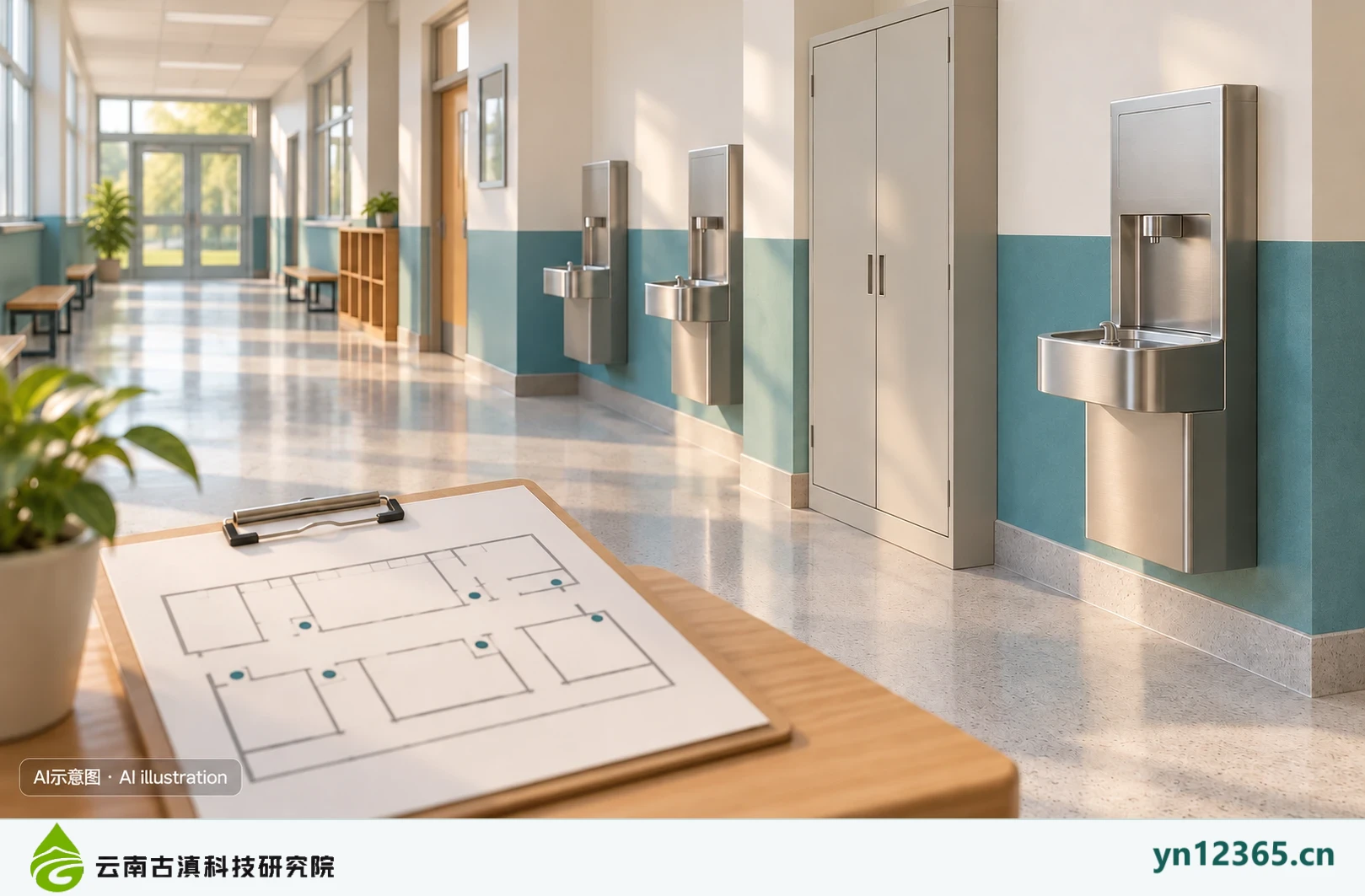
Image note: the cover is an existing AI-assisted equipment illustration, not a photograph of a university, research apparatus or project.
Discuss your information:
Contact and enquiries