Edited by GUDIAN Water · AI-assisted compilation and review · Sources checked: 2026-10-21
A laboratory saying it “needs pure water” may mean cleaning, solution preparation, instrumental analysis or another specific experiment. Without the method and dispensing location, comparing names, production rates or screen readings can conflate different requirements.
1. Derive requirements from experimental methods, not product names
Ask the experiment lead for methods, instrument documents, stages using water and parameters to control. GB/T 6682-2008 is listed on the national standards platform as a current recommended standard and provides a starting point for analytical laboratory water. Its grades do not automatically cover every biological, trace-analysis or instrument-specific application.
Resistivity or conductivity is only part of the assessment. Experimental methods and equipment documents determine whether organics, particles, microorganisms or other specific parameters also matter. One resistivity reading does not establish suitability for all experiments.
| What to explain | Example documents | Misinterpretation to avoid |
|---|---|---|
| Water-use task | Experimental methods, instruments and cleaning stages | Conflating drinking water and laboratory water |
| Point-of-use requirements | Specific parameters, test methods and measurement points | Treating a main-unit reading as an endpoint measurement |
| Volume and continuity | Volume per draw, peaks and critical experiment periods | Considering only average daily demand |
| Maintenance and changes | Consumable compatibility, records and recheck arrangements | Replacing materials or altering pipework without confirmation |
| Suspension and exit | Interim plans, equipment and data handover | Leaving outage impacts outside the contract |
2. Assess the points of use when choosing centralised or distributed supply
Centralised production allows discussion of unified maintenance, but storage, circulation or distribution, points of use and inactive branches must also be checked. Distributed units need consumables, cleaning, space and service arranged at every location. Comparing main-unit counts alone is insufficient.
The university may compare purchase, rental or agreed maintenance under actual conditions. This public-source search found examples of pure-water equipment purchase, not sufficient evidence that rental of laboratory water systems is widespread. The university should confirm the proposed model first.
3. Include critical experiments and contingency arrangements for downtime in the requirements
For experiments needing continuous supply, define acceptable interruptions, backup sources, batch traceability and checks before reuse in advance. Response and repair arrangements must match actual equipment, personnel and spares; generic after-sales slogans are not a substitute.
For instrument connections, automatic make-up or data interfaces, specify what data is supplied, who may read it and who may change settings. Separate data analysis from equipment control. Without approval, do not upload experimental data to online models or enable remote control.
4. Rental feasibility requires both technical and procurement checks
First confirm that equipment, consumables and maintenance documentation cover the experimental task, then compare contract-term cost, ownership, assessment and withdrawal. For laboratories operating method-validation or accreditation systems, their managers must also assess the impact of changes.
For businesses entering this market, the sounder first document is a list of available models, applicability documents, consumables and services. Without evidence of laboratory use, describe the consultation-preparation stage honestly rather than claiming university service or experimental validation.
Frequently asked questions
Can a campus drinking-water dispenser directly supply a laboratory?
Its name or TDS alone cannot establish this. Reassess against the specific method, instruments and point-of-use requirements.
Does a higher ultrapure-water specification make water better for every use?
Different experiments focus on different parameters. A single figure cannot replace complete requirements, testing and point-of-use management.
Can a trial rental start before procurement procedures are completed?
The university must first confirm whether trials are allowed and their form, responsibilities, fees and procurement arrangements under the applicable rules. A trial cannot be used to bypass procedures.
Sources and reading scope
The sources below help explain historical requirement structures; notices do not mean applications remain open. Research news reports do not establish experimental replication or field validation. University, institution and standard names identify sources only, not cooperation, authorisation, certification or recommendation. No third-party figures or tables have been reproduced.
- GB/T 6682-2008, Water for analytical laboratory use — Specification and test methods; National Public Service Platform for Standards Information, 2008-05-15. Metadata for a current recommended methods standard. Applicability to a particular experiment requires the full standard, experimental method and instrument documents; no claim is made that it covers every experiment.
- Peking University College of Chemistry: tender notice for equipment procurement and installation in the pure-water plant room of Building E; College of Chemistry and Molecular Engineering, Peking University, 2021-04-28. Historical example of pure-water equipment purchase, not evidence of how widespread rental of laboratory water systems is or of its pricing. Specific production parameters have not been reproduced.
Continue reading
- Choosing a university drinking-water rental model: clarify payment and responsibilities first
- Reading university water-treatment research: from Yunnan universities to membrane materials, intelligent design and low-carbon desalination
- Acceptance of university drinking-water rental: specify maintenance records, fault recovery and exit handover
- Illustrated guide and requirements checklist for 20 water-use applications
- The difference between laboratory membrane materials and commercially available elements
- Field-validation boundaries for AI water-treatment research
University rental and service scopes must be confirmed against actual requirements, equipment documents, university procedures and resources that can be delivered. Use the website contact page to organise uses, campus addresses, points and schedules first. This article makes no claim of available equipment, signed projects, prices or on-site attendance.
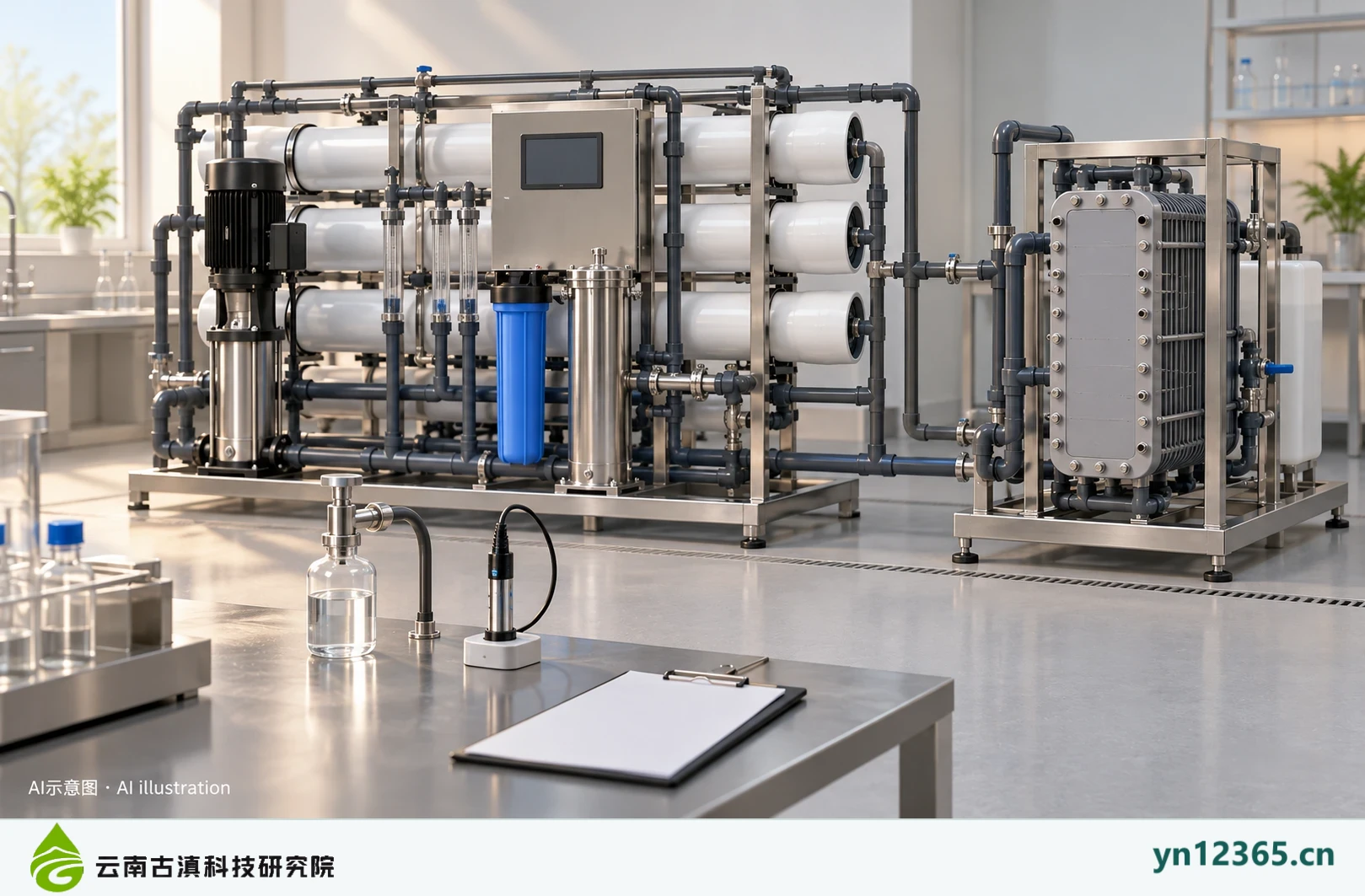
Image note: the cover is an existing AI-assisted equipment illustration, not a photograph of a university, research apparatus or project.
Discuss your information:
Contact and enquiries