
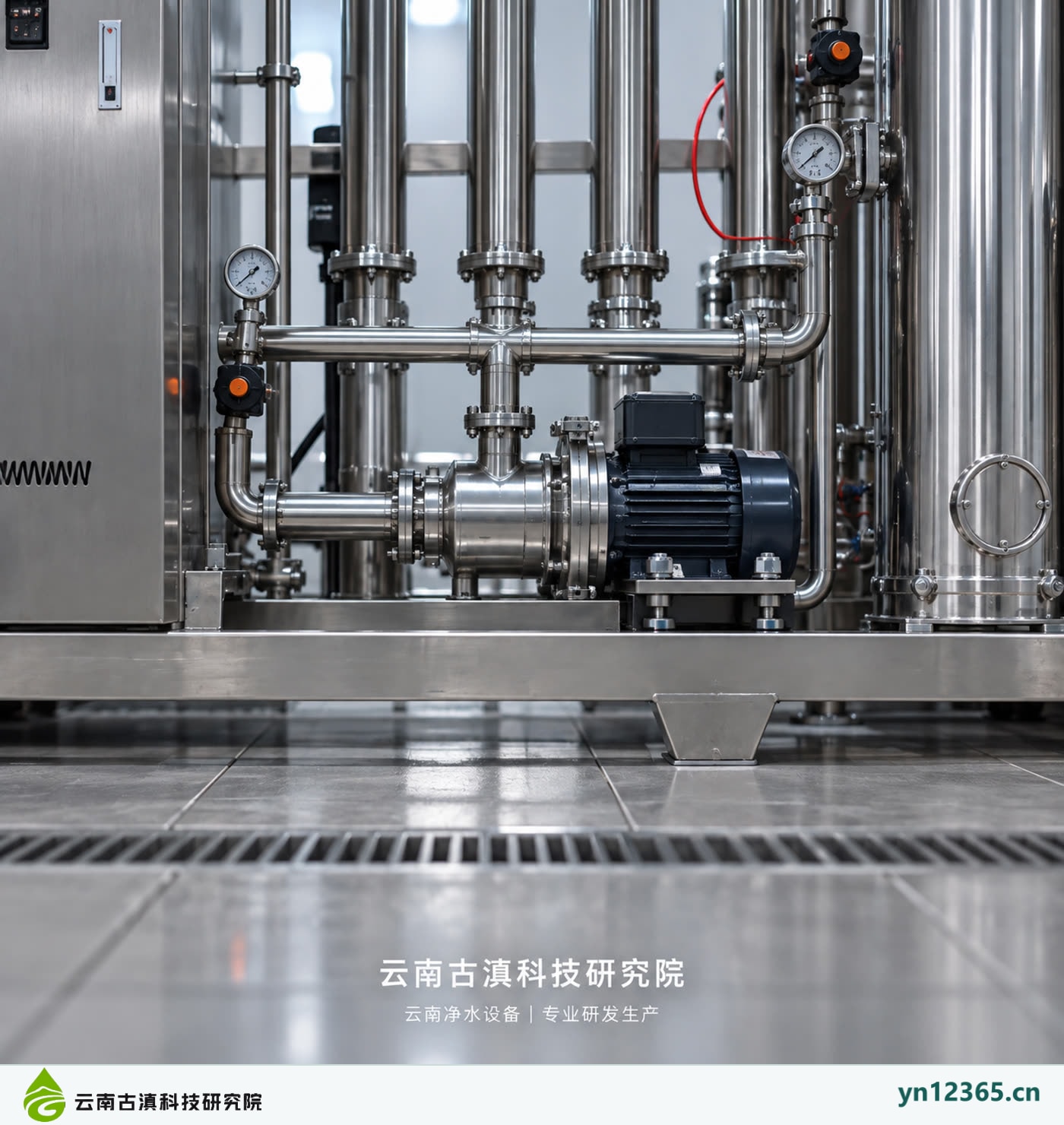
Fertigation integration requires growing, irrigation, and equipment information together. Purification and fertilizer application equipment each have their own tasks. Equipment appearance or names do not justify promises of higher yields, water savings, or a fixed percentage reduction in fertilizer use.
Have growing and design personnel review water source information
Record the water source, seasonal changes, testing, and crop management objectives. Confirm downstream requirements separately for soilless growing, soil cultivation, and other methods. Interpret raw water pH, conductivity, and other data for actual crops and management conditions. No universal nutrient recipe is provided.
Irrigation zones and peak demand guide equipment discussions
Record zones, rotation periods, irrigation methods, and emitter or downstream equipment requirements. Assess storage, filtration, membrane treatment, and other stages by task. Do not use the illustrated equipment sequence directly for construction. Define purification and fertilizer application scope, connections, and control responsibilities clearly.
Crop photographs do not replace equipment acceptance results
Retain equipment models, connections, instrument checks, operator training, and operating records. When a problem occurs, distinguish water source, irrigation, fertilizer application, and crop management factors before the corresponding personnel address it. Actual yield or financial returns require independent project evidence and cannot be inferred from promotional images.
| Item to check | Required supporting information |
|---|---|
| Growing information | Crops, methods, water source, and downstream objectives |
| System information | Zones, rotation schedules, connections, and control responsibilities |
| Handover records | Instruments, operation, training, and fault reporting contacts |
Frequently asked questions
Does adding RO equipment guarantee higher crop yields?
No. Growing results depend on multiple conditions. Specific conclusions require evidence from real projects.
Products and related resources
Selection and gallery guide for all products · Describe your actual water requirements
Content note:Prepared with AI assistance and checked against existing product category information and illustrations on October 4, 2026. This article supports discussions of requirements and documentation; it is not testing, licensing, a quotation, or evidence of results for a corresponding model. Confirm implementation according to product documents, actual operating conditions, and applicable requirements.
Rated filtration flow does not establish that backwash requirements are met
Filtration and backwashing are different operating modes. When purchasing an automatic backwash filter, check more than the normal filtration flow: confirm the flow and pressure available during backwashing, the filter units operating simultaneously, whether downstream irrigation continues, and whether the drainage system can handle the backwash water.
| Condition | Information source | What to confirm |
|---|---|---|
| Normal filtration | Actual irrigation zones and filter flow data | Flow, inlet and outlet pressures, and the differential-pressure baseline |
| Backwash water supply | Instructions for the selected filter, pump curves and site water-supply records | Whether backwash flow and pressure meet the requirements of that model |
| Water supply during backwashing | Valve sequence, storage and irrigation-zone scheduling | How downstream supply will continue, operate at reduced flow or pause |
| Triggers and actions | Control documentation and the agreed supply list | Time-based, differential-pressure or manual triggering; how valves and alarms will be checked |
| Drainage and return to service | Drainage conditions and operating records | Confirm the drainage route, completion of backwashing and return to filtration |
Use illustrations to discuss the layout; confirm functions against the supply list
The appearance of a control cabinet, valves or pipework in an image does not establish that the system supports automatic backwashing, closed-loop EC/pH control or remote control. State in the supply list whether each function is included, the relevant model and how it will be verified. Draining and backwashing are not interchangeable functions across all filters.
Check the manufacturer's backwash requirements against the water source and the filter media or elements. Experience-based multipliers and wash durations in the knowledge base must not be treated as operating settings for every model. Fertigation and irrigation outcomes must not be expressed as fixed yield increases or fertilizer savings.
Sources and scope
Drafted with AI assistance on 8 October 2026 and checked item by item against the knowledge base and the public sources below. Manufacturer information explains the relevant technology; it does not imply that Gudian is an authorized distributor or manufacturer for that brand. Equipment specifications are subject to the selected model and confirmed documents.