
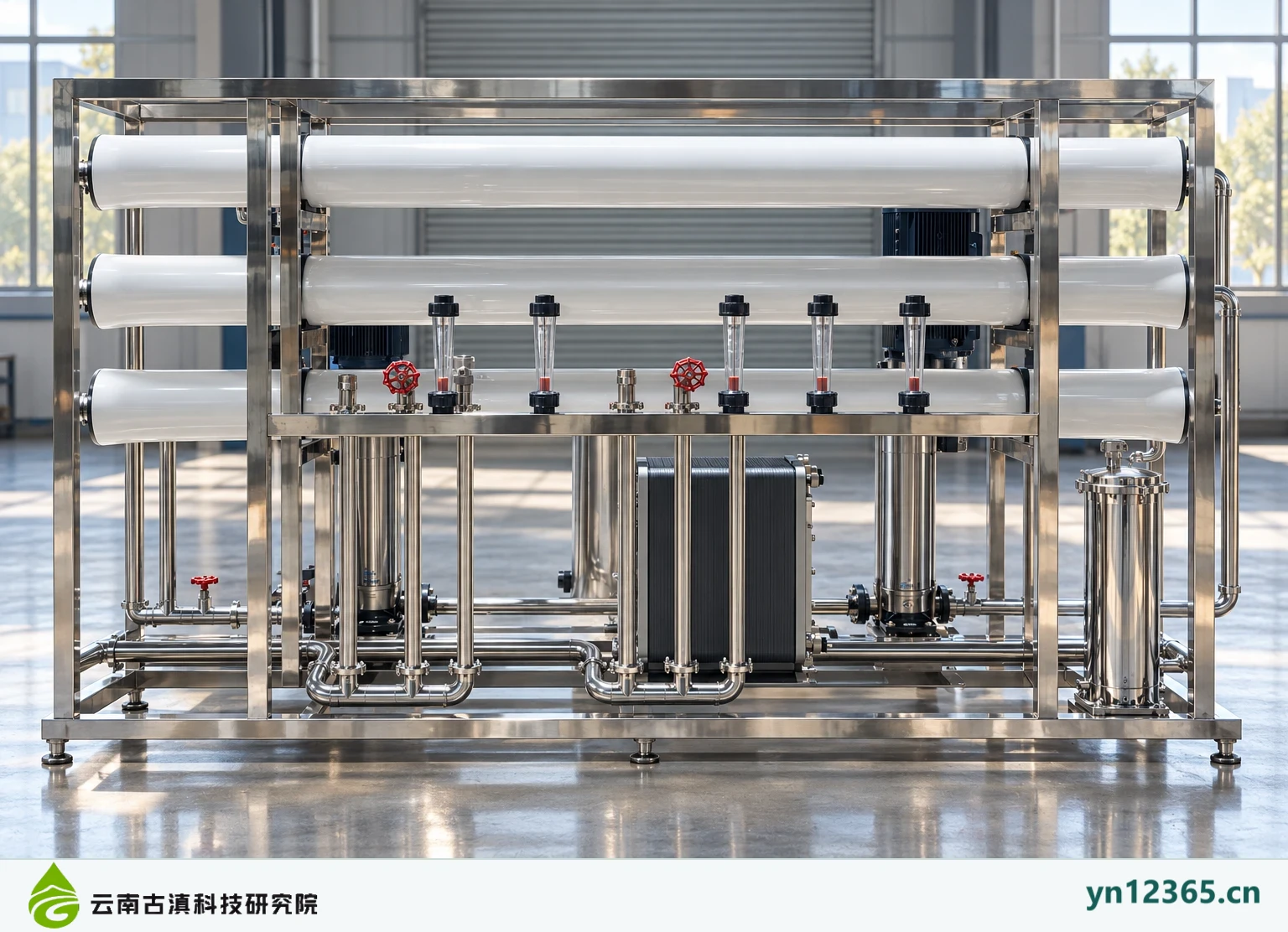
Engineering plan analysis · Not a delivered project case
Industrial projects should record production, cleaning, cooling, process makeup water, and domestic water separately. Total water demand does not replace the water quality and peak requirements of each branch. Equipment names do not establish energy savings or production returns. This article does not describe an actual industrial park project.
Downstream objectives determine assessment scope
Record each downstream device, process, and operating period, and retain allowable water quality or design documentation. Identify raw water and reclaimed water separately. Unknown constituents require additional testing. Candidate technologies should state which task they address. A more elaborate configuration is not necessarily more suitable.
Clearly draw existing system connections and the concentrate outlet
Feedwater, product water, concentrate, storage, and other branch boundaries must match the site. Check discharge, reuse, or disposal requirements for the actual project. Do not redirect concentrate to another use without authorization. Photographs and illustrative layouts support discussion but do not replace formal connection and construction documentation.
Use a consistent basis for cost comparisons
Record applicable conditions separately for equipment, energy, water use, consumables, maintenance, and shutdown costs. Without measurements or a reliable design basis, provide no savings percentage or payback period. Retain versions when plans change so procurement documentation stays aligned with acceptance objectives.
Engineering results must be reviewable
Retain commissioning, operating baselines, branch-specific testing, and acceptance records. Dates, models, and parameters in actual cases should correspond to original materials. Production returns or capacity changes require independent evidence and cannot be inferred from membrane data sheets or galleries.
| Item to check | Required supporting information |
|---|---|
| Branch requirements | Application, downstream objectives, daily consumption, and peak demand |
| Connection boundaries | Raw water, product water, concentrate, and disposal |
| Verification basis | Operation under comparable conditions, testing, and cost evidence |
Related equipment and next steps
- RO pure-water equipment for highland locations · Selection and maintenance articles
- RO membranes · Selection and maintenance articles
- Antiscalants · Selection and maintenance articles
Equipment categories and scene gallery · Industry solutions · Submit this inquiry
Content note:Prepared with AI assistance and checked against existing product category information and illustrations on October 4, 2026. This article supports discussions of requirements and documentation; it is not testing, licensing, a quotation, or evidence of results for a corresponding model. Confirm implementation according to product documents, actual operating conditions, and applicable requirements.